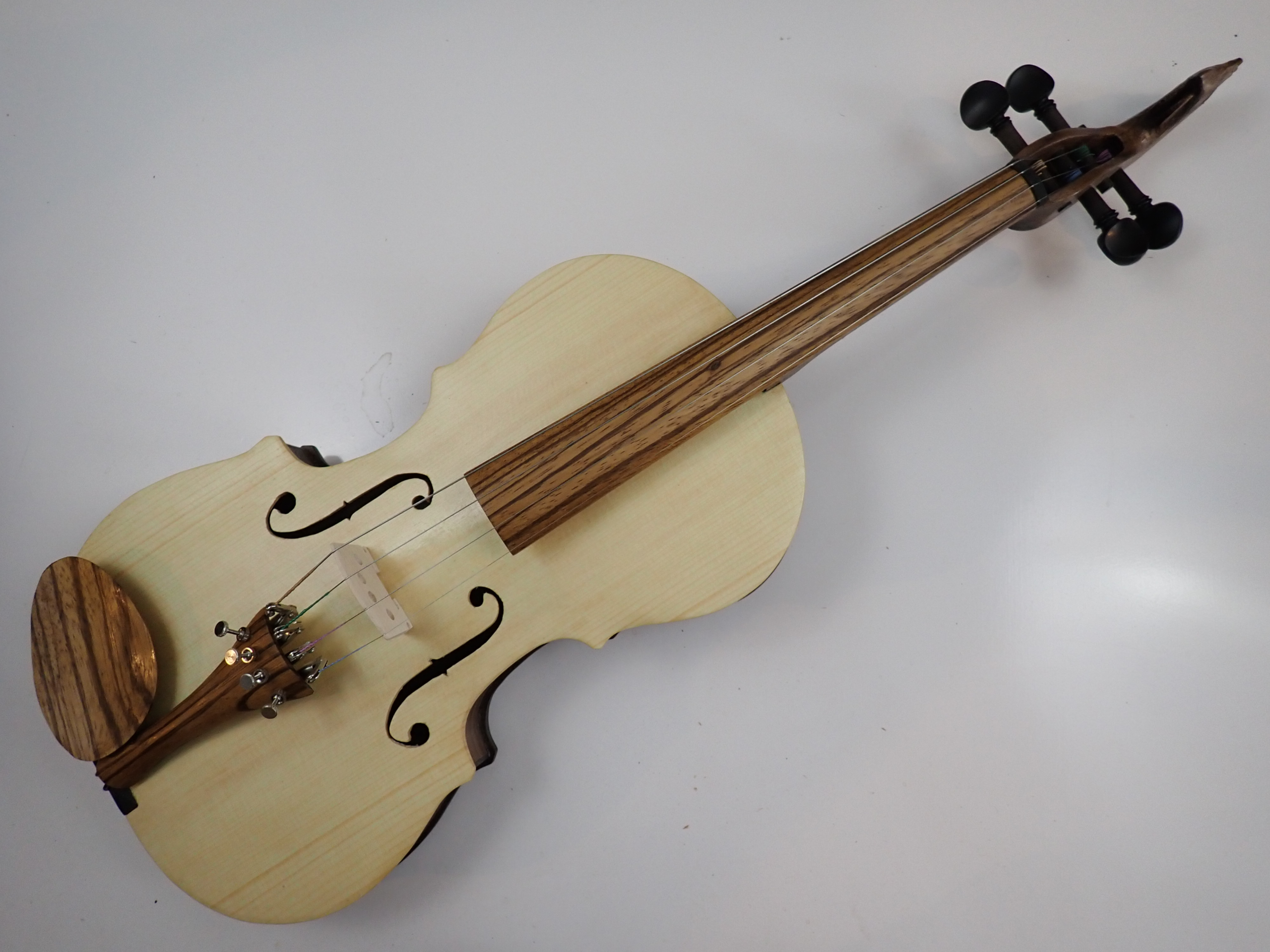
This fiddle is another 4/4. The back, ribs, and neck, are walnut, and the soundboard is red spruce from adirondackspruce.com. The fingerboard, chin rest and tailpiece are zebrawood. The pegs, nut, endpin, and endrest are ebony. The pegs and endpin were bought, everything else was carved here. The back is one piece, and has some curly grain in a couple of spots. The finish is Tru Oil. If you want a case I can ship it in a new Featherweight for $40. To see a video of this fiddle please follow the link below.
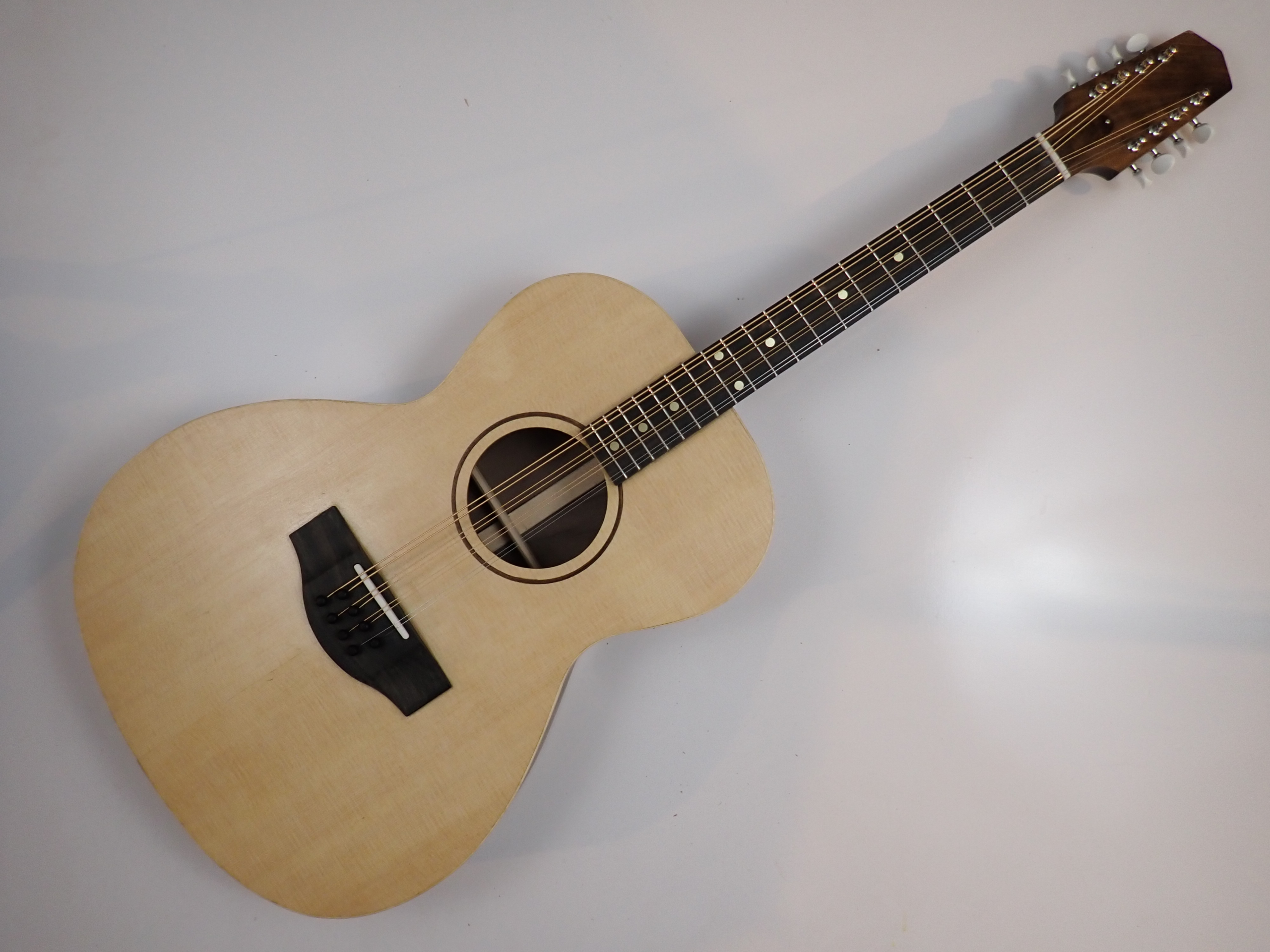
This instrument design was originally an experiment. I worked it out in consultation with the person who placed the custom order for it, and he provided a plan for a ca. 1937 Gibson L-00 (Guild of American Luthiers plan #55) from which the soundbox design is taken. The only change I made to the soundbox was to reduce the depth to 3″ throughout. The guitar had a 14 fret neck with a longer scale, but the mandolin has a 12 fret neck with a 22″ scale length. This leaves the bridge in the same position it would be in on the guitar. I was very pleasantly surprised by how resonant the first one was, and now that I have built more to the same specifications they are just as good.
The neck is a soft V shape. The neck, sides, and back are walnut, the soundboard is Sitka spruce, the peghead overlay is walnut, the binding is curly maple, and the bridge pins, fretboard, and bridge are ebony. The fretboard and bridge have some light streaks in the ebony. The dots are brass, the nut and saddle are Corian, and the tuners are Gotohs. The finish is Tru Oil. The nut width is 1-1/2″ and the fretboard has a 7.25″ radius. I don’t have any mandolin playing skills but I hope the video will give some idea of the sound.
This has been a bit of an odd month, but mostly in a good way. At the start of the month I was working on two custom banjos and a stock octave mandolin. Then the bigger bandsaw (a Parks 18″ from the 1980s or so) had a bearing go out on the lower shaft. For three or four days I was doing all the things I normally do on this bandsaw with the little 10″ Rikon, which worked better than it might have but was a bit inconvenient. I found that Sturdy Supply in Saranac Lake sells bearings in some of the more common sizes when I was in that town to get my teeth cleaned, and I was able to get back into business sooner than I had expected. I found some wear on the shaft where a bearing had spun, but the saw is running fine now. Then once I got the big saw back together the little one had a motor bearing go bad. Luckily I had a couple of bearings on the shelf that had been spare thrust bearings for my old 18″ saw, and they happened to be the right size, so I only lost an hour or two. Then I caught a cold and was sick for a few days.
Once I finally got back to work in a steady way I completed banjo #330. It was an 11″ walnut fretless banjo with 24 brackets and a double cut peghead, and the customer cut out his own inlay for the peghead out of brass. I told him I will install anything but I don’t cut my own inlay, and he was not able to find a pre-made inlay in the shape he wanted. He did a very nice job making the inlay.
The second banjo (#331) I had been working on before the saw issues and the cold was delayed because I had to order padauk for the trim pieces and the place I got it from on eBay is one of those that prints the label right away but doesn’t actually put the box in the mail for a week or so. I should have ordered it further ahead. The banjo is a curly maple C scale with padauk and pau ferro.
At the same time as banjo #331 I completed octave mandolin #7, made from walnut. I listed it on Mandolin Cafe as well as here on my website, and much to my astonishment it was bought within 4 hours, and three other people wrote to express an interest after it was sold. I began working on a cherry octave mandolin, #8, but when it was completed there was much less interest, and as of now it is still available. I then began another walnut one since two of the folks who had written had expressed a definite preference for walnut. One had asked to be notified if the first buyer sent #7 back, so I offered him first refusal on #9 and he bought it. All three of these guitar-bodied octave mandolins are shown on the Mandolins page.
#9 was built concurrently with banjo #332, which was an 11″ walnut internal resonator banjo with a wider shallower neck and a radiused persimmmon fingerboard with ebony flush frets. I am always interested in trying to build instruments that will fit people better, if they know what they want and it’s something I can do.
I’ve been without an internal resonator banjo in stock for a month or two now, and also I have not had 12″ walnut banjos since last fall, so I’m hoping to make the usual two of those and the internal resonator this month, and an 11″ banjo with some of the spalted beech I located while organizing the lumber cart in the shop this week. I knew I had the beech somewhere but could not remember where, and the only other time I used it to build a banjo was 8 or 9 years ago. I’ll be starting first on yet another walnut octave mandolin, and will plan to keep one in stock, and replace it as soon as possible when it’s sold, since there seems to be an unexpected demand for these.
This week I met two folks from further east in the Tri-Lakes area who came to try out the instruments I have on hand and for one of them to get a spike put in his banjo’s fretboard. He has agreed to play the new batch of stock banjos when they’re built so I can have better demonstration videos. I never learned to play clawhammer, or to play well in any style, so it will be helpful to have someone nearby enough to demonstrate my new stock banjos regularly. I’ll plan to build them all in a batch so they’re all ready at once.
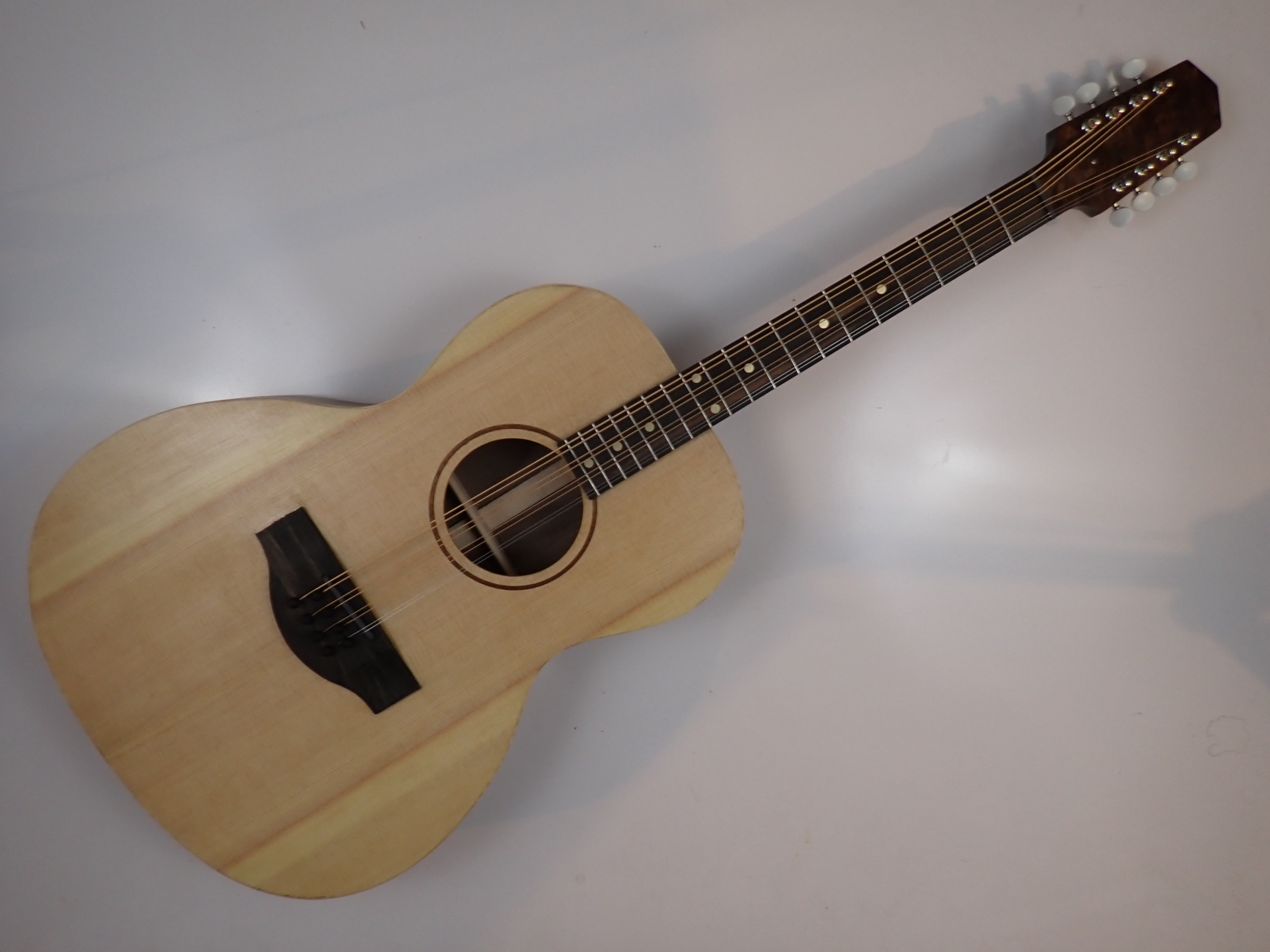
This instrument design was originally an experiment. I worked it out in consultation with the person who placed the custom order for it, and he provided a plan for a ca. 1937 Gibson L-00 (Guild of American Luthiers plan #55) from which the soundbox design is taken. The only change I made to the soundbox was to reduce the depth to 3″ throughout. The guitar had a 14 fret neck with a longer scale, but the mandolin has a 12 fret neck with a 22″ scale length. This leaves the bridge in the same position it would be in on the guitar. I was very pleasantly surprised by how resonant the first one was, and now that I have built more to the same specifications they are just as good.
The neck is a soft V shape. The neck, sides, and back are walnut, the soundboard is Sitka spruce, the peghead overlay is curly walnut, the binding is curly maple, and the bridge pins, fretboard, and bridge are ebony. The fretboard and bridge have some light streaks in the ebony. The dots are brass, the nut and saddle are Corian, and the tuners are Gotohs. The finish is Tru Oil. The nut width is 1-1/2″ and the fretboard has a 7.25″ radius. I don’t have any mandolin playing skills but I hope the video will give some idea of the sound.